





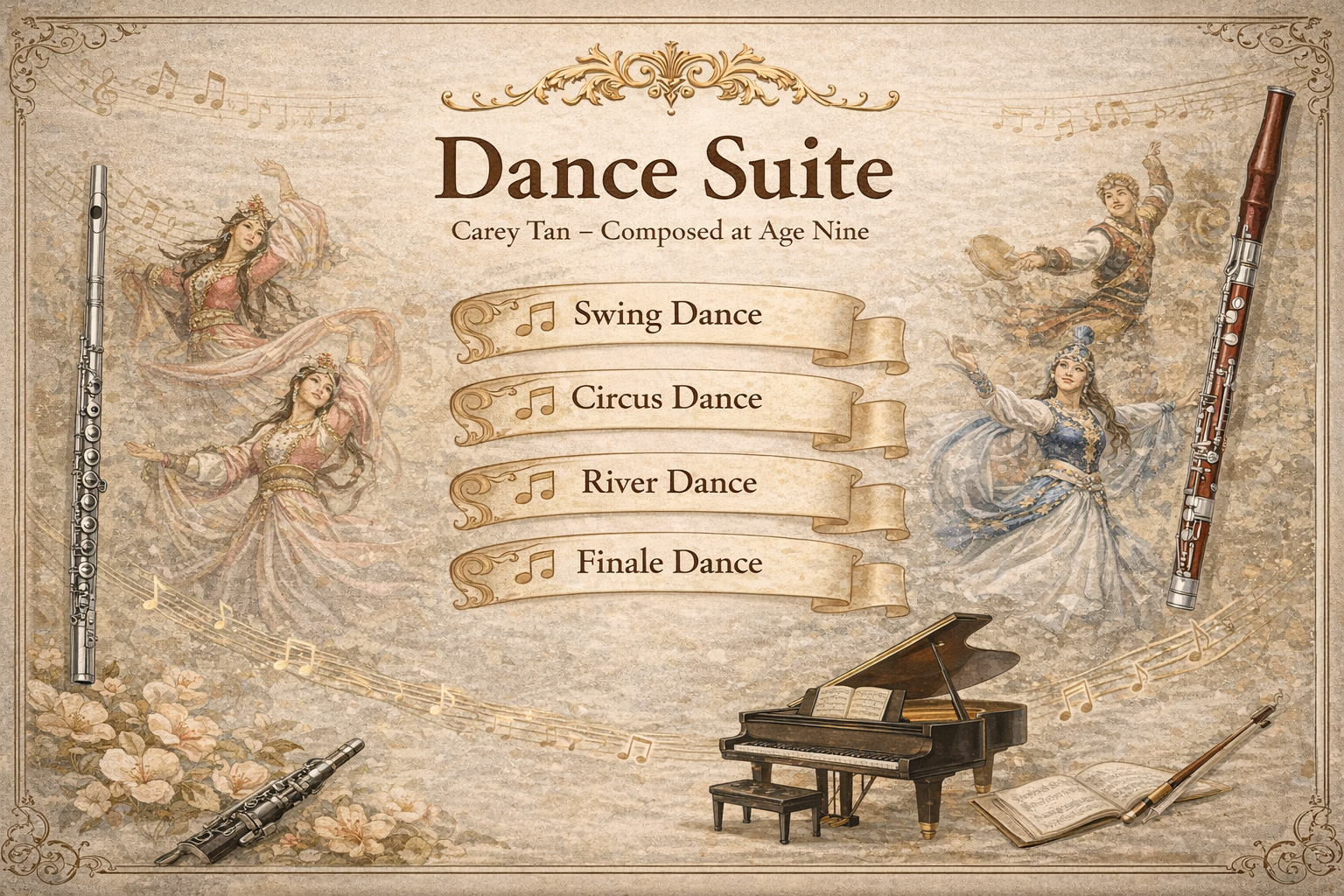
Dance Suite is a chamber work composed by Carey Tan at the age of eight, scored for flute, oboe, bassoon, and piano. The suite consists of four contrasting movements: Shaker Dance, Circus Dance, River Dance, and Finale Dance.
This work forms an important part of the composer’s portfolio for the Grade 8 Composition examination of the University of West London, serving both pedagogical and presentational purposes. Centered on the theme of “dance,” the suite creates a vivid and imaginative musical landscape through a variety of rhythmic patterns and contrasting musical characters.
Shaker Dance
This movement is characterized by light and elastic rhythms, with a clear sense of pulse and lively motion. Repetitive rhythmic motifs and flexible melodic lines create an atmosphere of free, swinging movement. The interaction between parts forms a transparent and flowing texture, giving the music both stability and vitality.
Circus Dance
This movement presents a playful and humorous character, with varied rhythms and strong theatrical flair. Through accented gestures, shifting meters, and expressive melodic writing, it depicts a lively and imaginative circus scene. The music is colorful, energetic, and full of vivid imagery.
River Dance
In contrast, this movement adopts a lyrical and flowing style. The melodic lines unfold smoothly, resembling the continuous motion of water. With a more relaxed tempo, gentle harmonies, and subtle changes in tone color, it creates a calm and poetic atmosphere, while maintaining an underlying sense of motion.
Finale Dance
As the concluding movement, this section features more vigorous rhythms and drives the suite toward a climax. Through the gradual development of motifs and strong dynamic contrasts, it builds an energetic and festive dance scene. All parts work together within a compact and well-structured framework to bring the work to a powerful close.
In terms of instrumentation and texture, the piece demonstrates a strong sense of balance. The woodwind trio and piano interact responsively while maintaining individual independence, resulting in a clear and layered overall sound. Furthermore, the development of motifs, sectional contrasts, and structural organization reflect a notably mature musical thinking, revealing the composer’s creativity and compositional control at an early age.